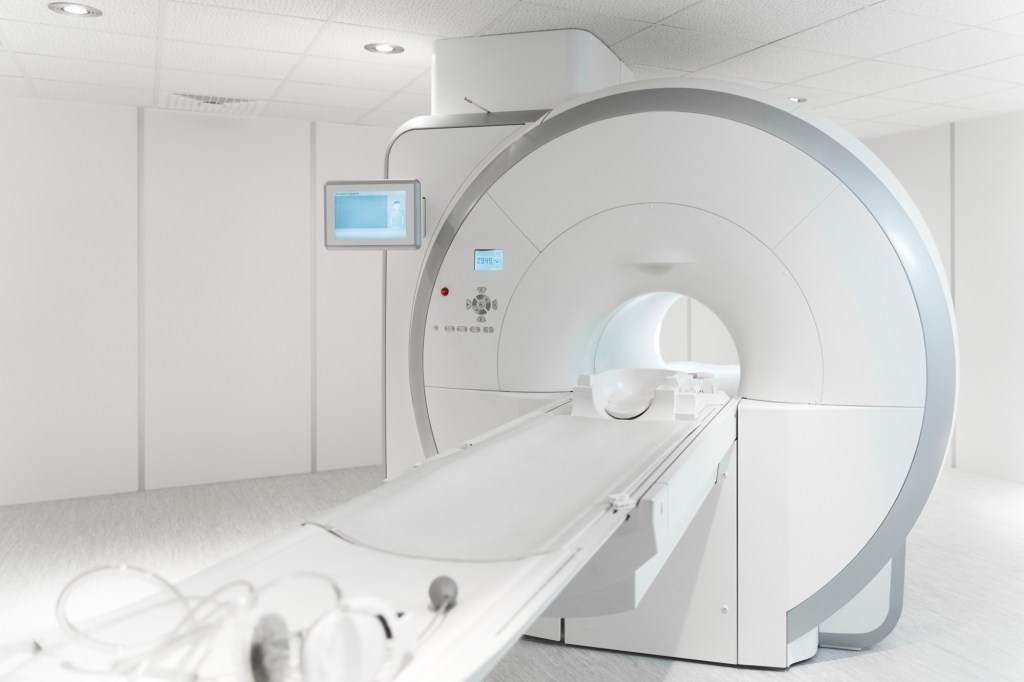
Yesterday I made my annual pilgrimage to Fairfax Radiology for one-plus hours of pure MRI-powered bliss. One of my favorite ways to spend my free time.
The medical building housing this imaging center sits just off Northern Virginia’s “Beltway,” which is to say I-495, just across the street from Inova’s world-class Fairfax Hospital, with a beautiful glass front, and free valet parking. Rarely do I splurge on the parking perk, but I took advantage of it yesterday, because I’m still in The Boot and needed a ride up to the third floor from a qualified wheelchair pusher.
That, however, is not where the true entertainment begins. (Bear with me… I’m trying my best to build up the anticipation.)
When I arrived at the MRI suite (and why they call it a “suite” is beyond me, because there is no minibar or king size bed, or view of the Vegas strip, but whatever), I was one of something like ten other people there, and I was pushed to an office to sign some papers. As I began signing the paperwork, I heard a voice that said what I could swear sounded like, “now boarding.”
I would later realize this was an omen.
By the time I finished filling out my paperwork and was pushed back into the waiting room, I was parched and wishing I’d brought my Owala with me into the building, so I was thankful to see, not far from me, a water cooler next to a stack of paper cups. And so I got up from my wheelchair and walked on the heel of The Boot (since I have still not been cleared to put full weight on it due to a still-healing Feb. 10 osteotomy and toe amputation), looking like The Penguin (so my son tells me—not to be confused with “a” penguin), to get a cup of water. I filled up the cup and downed it in one go—something I would later regret.
I returned to my wheelchair and sat there watching HGTV, the go-to channel for every radiology suite, until a radiology tech (we’ll call him “Joe”) who had all the warmth of, well, a radiology tech, pushed me through double doors and to the doorway to a changing area, where I dismounted and did The Penguin walk down the hallway to a changing room.
I was asked all the normal MRI pre-screening questions there: do I have metal shavings in my eyes, do I have a pacemaker, do I have any prison tattoos (yes, that really is an MRI pre-screening question), am I wearing a bra with underwire or anything else that contains metal… After answering no to them all, I was told to take off my Apple Watch and put it and my phone in my purse. Joe then left me and I waited another twenty minutes until he came to retrieve me, taking the key to the room with him, and leading me back out of the changing area to my waiting chariot. As he pushed me into the MRI area, another tech rounded the corner, clearly worried, and yelled for him to stop. The wheelchair I was sitting in, that Joe was merrily pushing into the MRI area, wasn’t even supposed to have gotten past the double doors that led to the changing area.
Omen number two.
At this point, all I could imagine was dying a fiery death on my metal wheelchair as I was sucked into a whirring MRI machine. Thankfully, though, the second tech brought us an MRI-friendly wheelchair, which I happily got into, preventing me from meeting my doom.
Joe then wheeled me to the IV station, where I sat in a blood-draw chair that had arm rests on either side, to prepare for my second-most fun part of the day, until I realized I had to pee, and so I slid off the chair and sat in the wheelchair and was then pushed down the hallway to a bathroom.
“There were voices down the corridor, I thought I heard them say… Welcome to the Hotel California…”
Sorry. Wrong story.
What I really heard was the voice of a man who’d clearly not read the “what to wear to an MRI” directions, and as a result was wearing a hospital gown and nubby socks, exiting one of the two bathrooms in the suite, telling the radiology tech who was pushing me down the hallway that the bathroom was flooded and he didn’t want to get his socks wet. Understandable. So I was left there in my wheelchair, while the tech went to find help from whoever radiology techs find help from who fix flooded bathrooms in an MRI suite, and the man went to the other non-flooded bathroom. Then he exited and told me, “There’s no water in that one.”
Now by that point I’m thinking to myself: huh. No water. Given my brush with death, that tracks.
But as I smelled the colitas rising up through the air, I hoped that was not the case.
“No water?” I asked, somewhat concerned by the news, thinking it’s going to be port-a-potty Tuesday at Fairfax Radiology.
“No, I mean there’s no water on the floor,” he said, smiling.
I was relieved at the news that there was, in fact, running water in the bathroom, so I went, then left and was once again pushed by Joe back to the IV room.
He pointed to the chair I’d earlier vacated, and I sat down again and held out my arms and he proceeded to tap the crook of them with his fingers, looking for a good vein and telling me, loud enough for the other tech in the room to hear, that he couldn’t find one.
Now this is a not uncommon thing for me, and I usually blame it on the chemo I received for Ewing’s sarcoma for ten months in 2021, but the truth is I had not hydrated enough yesterday for them to be able to find a vein, and I have terrible veins anyway. (Truly, I would not be a good candidate for IV drug use.)
The other tech in the room came over, pushed around on my arms, and pointed to a vein she’d found in the left.
“There,” she told him. “That one’s good. See it?” He nodded, but I could tell by his body language that he did not. I longed for her to take over from Joe, but she left the room and he snapped on a pair of gloves, then reached for a packet of alcohol wipes lying on top of the IV supply table next to me.
Shit.
The first time he stuck me he wriggled the IV’s catheter around until it was partway out of my vein, but still attached the saline-filled syringe to it and pulled the plunger back until he got a blood return, then pushed it forward, and the saline dripped out of my arm and down the side of the chair.
“Oh,” he said, casually, “Let me try again.”
I gritted my teeth and tried to act cool as he disconnected the syringe and went to retrieve another. He hooked it up to the half-out-of-my-vein catheter and pulled back on it, once again seeing a little blood return from the catheter, but this time not quite into the syringe. Then he once again tried to advance the plunger. Nothing.
“Hmm. It’s coming out, but it’s not going in,” he said.
“That’s what she said,” I said under my breath.
“What’s that?” he asked, but I thought it best not to repeat myself.
“Nothing,” I told him.
He reached for a square of gauze and pressed it to my arm then told me to hold it, and to stick out my right arm. And as he did this, I asked him, “Is this a common occurrence?”
“Yes,” he said.
Just so you know, this has never happened to me, and I’ve had multiple blood draws over the course of my nearly forty-nine years on planet earth. But I did as I was told and he tore open another alcohol packet, tapped around, and swabbed my arm, seemingly satisfied he’d found another vein. He stuck me again and I heard the snap of the IV go in. A good sign, I thought, as he retrieved a third syringe of saline and screwed it into the IV, then pulled back the plunger and pushed it into the IV. I looked over and saw the crook of my arm start to balloon up.
“This one’s blown,” he said. “Maybe we should try your hand.” He reached for another square of gauze. “Hold this.” I held my hand against the gauze as he pulled out the IV and started looking at my left arm again, first at my forearm and then at my hand.
“I’d really appreciate it if you wouldn’t use my hand,” I told him.
Thankfully, that was when the other tech returned to the room.
“Hey,” Joe asked her, “would you mind coming over here and giving me a hand?”
“Sure,” she said, and came over, pulled on a pair of gloves, swabbed the crook of my left arm, still bloody from Joe’s first two attempts, then swabbed my right, hooked up my IV and pushed saline into it.
“I can taste the salt,” I said, breathing a sigh of relief.
Then she taped it up, and as she did this, Joe came over again, surprised.
“Wow,” he said. “You found a vein?”
Duh.
“Yep,” she said, rolling her eyes. He ordered me off the chair and into the wheelchair, then pushed me back to the changing area. “Sorry,” he said, “you’ll have to wait here again. Then he walked down the hallway, unlocked the door to my changing room, and told me to have a seat. I hobbled toward him and he handed me the key.
I stared at IV tubing taped to my forearm and waited as Joe went to the room next to me to ask a woman there the same pre-screening questions he’d asked me earlier.
Roughly thirty minutes later, yet another tech appeared and had me hand her my things, which she then put inside a locker in the hallway.
“I’m going to be the one doing your MRI,” she said. “But first I’m going to have to set your things inside this locker. They need these rooms. What year were you born?”
For a minute I honestly couldn’t remember. Nineteen-something…
When I finally remembered and told her, she set the combination lock, then pushed me down the hallway in the MRI-friendly wheelchair.
“Um, should I use the bathroom?” I asked her. “I mean, I just used it thirty minutes ago, but should I go again?”
“Do you need to go?” she asked.
“Not really, but I’m going to be inside that tube for over an hour, so I feel like I should try.”
She agreed and pushed me back to bathroom number one, the floor of which was now dry, and I met her outside afterward and she pushed me in my wheelchair to the doorway of the MRI room. I leaned forward in the chair as she ran a wand over me to check for metal. Then she had me remove The Boot and leave it on the floor next to the door and pushed me inside, where I was told to lie down with my head facing the Donut of Doom, and I did as I was told and she put my earplugs in and placed a blanket over me and a little panic squeeze ball into my hand, then retreated to the room behind the machine.
As I mentioned earlier, this is not my first MS MRI rodeo. I’ve had this same series—brain, cervical, and thoracic—year after year going back to at least 2015. I’m surprised I don’t just stick to the machines on contact I’ve had so many. They used to be three-hour minimum marathon sessions, in fact, and I am not even kidding. Even with as many as I’ve had, though, I still fear having metal somewhere in my body that will lead to my internal organs being fried by the machine. So far, though, knock on wood, I’ve been lucky.
I felt the table move me into the machine, and then the jackhammering started, first pinging, then banging, and then, about twenty-five minutes in, a thud, thud, thud started, and I felt a jolt of what I can only describe as an electrical pulse under the left side of my body just along the strap of what I thought was my sans-metal sports bra. The jolt was so hard that I came up off the table and, for the first time in my life, I squeezed the panic ball. So this is how I go.
Then the banging stopped and the tech’s voice came on the intercom.
“Is everything okay?”
Is everything okay. Yeah. Except for that part where my back is being burned by giant magnets. I could just see the headlines: “Elizabeth Kirkland, 48, dies in Fairfax MRI machine.”
The tech came into the room and leaned over me as the table started to move me out of the machine.
“I think it’s this bra I’m wearing,” I said. “I’ve never worn it for an MRI before. I’d like to take it off.”
She helped me sit up and left the room as I quickly pulled my T-shirt up over my head and pulled my bra off, hoping it wouldn’t get stuck halfway up my body. After I’d successfully gotten my bra off, I pulled my T-shirt back on and the tech reentered the room, and I handed her the bra, which she set on a nearby chair. Then she helped me lie back down again as I apologized profusely. She placed the panic ball in my hand again and left the room once more and I felt the table slide me back into the machine.
By now I was seriously freaking out. Is there metal in my T-shirt? Is there metal in the elastic waistband of my yoga pants?
Just as my fear began to subside, I heard the pinging again, then the banging, and then, twenty-five minutes in, the thud, thud, thud, and again I felt the jolt. I considering squeezing the panic ball again, but instead laid there thinking of the news headlines and television coverage that would follow my death by MRI machine.
Death, thankfully, did not come. My urge to pee, however, did. Then the machine stopped and the table moved me out again, and the technician entered the room to come over and hook my IV up to the machine that would administer the contrast.
“Doing okay?” she asked.
“I do have to pee,” I admitted.
“There’s only another twenty-five minutes left,” she said. I told her I would hold it and she left the room. I tried to think of anything else but the need to pee as the minutes ticked by… slowly. I was so grateful I had not brought my Owala with me to the waiting room.
When the tech came in after the scan was done, I told her I’d still felt the jolt and guessed the reason for it must just have been the sequence. She nodded and I apologized again, then she pressed a square of gauze on my arm as she removed my IV and placed a bandage around it, then helped me up off the table and I took out my earplugs and placed them in her hand. Then she wheeled in my wheelchair and situated it just below where I was sitting and I balanced on one foot and did a not-so-graceful pirouette into it, handed me my bra, and pushed me out of the room where I put my boot back on. Another tech came over and pushed me back to the bathroom where I emptied my bladder for the third time, then to the changing area to retrieve my things from the locker.
I hobbled over to the door and to the combination lock. Two numbers above, two numbers below: 1-9-7-7. I turned the knob, unsuccessfully. I looked at the tech, then tried again. Still, it would not turn.
“What’s your combination?”
I told him, and he attempted to open it. Still no dice.
“You’re sure this is the right locker?” he asked. I nodded.
“Maybe there’s another way,” he said, and adjusted the combination, then turned the knob. It opened.
Thank God.
He reached in and pulled out my purse, handed it to me, and I slung it over my shoulder and hobbled back to the wheelchair and sat down, then he pushed me back to the waiting room, which by that time was nearly standing room only, and to my metal wheelchair.
“There’s a machine down,” the tech explained. “Engineering still hasn’t come up to fix it.”
Suddenly I felt relieved that I’d gotten in before that had happened.
“Wait here,” he said, and went up to the counter to tell the receptionist to call someone up to help me back down to my car. Then he disappeared through the double doors back into the MRI area, leaving me to sit in the waiting room next to fifty of my closest friends.
As I sat there waiting, a Gen Zer walked into the room wearing a T-shirt he’d either thrifted or swiped from an older friend or relative. Screen-printed on the front was a picture of Britney Spears and the words, “Oops, I did it again.”
Fitting.
And that was the time I almost died in an MRI machine.

 Absurdities and Fires